
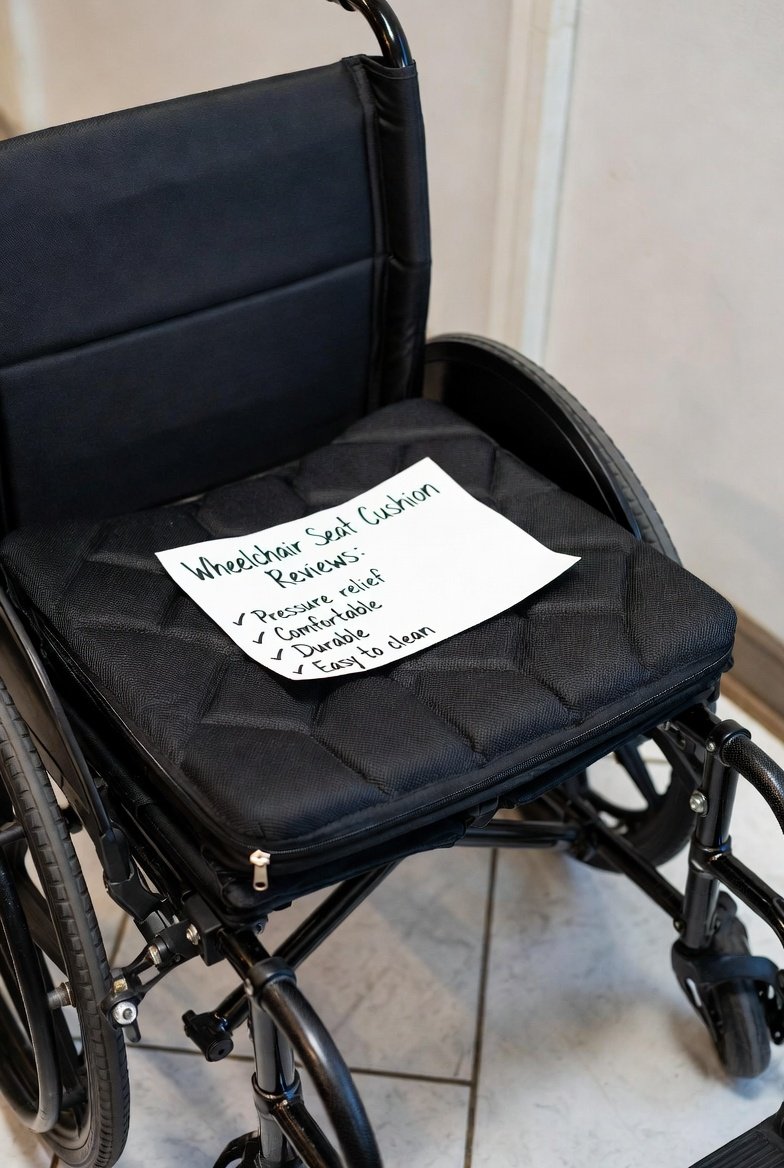
Wheelchair Seat Cushion Reviews: Real-World Comfort, Support, and Daily Use Compared
Wheelchair seat cushions are one of the most frequently replaced mobility components — not because they fail overnight, but because bodies change, sitting tolerance shifts, and pressure behaves differently over time.
What feels great during the first hour can feel completely wrong by the sixth. And what feels “too firm” on day one can become the cushion you keep for years because it holds posture and reduces late-day fatigue.
These wheelchair seat cushion reviews focus on real-world performance patterns — comfort over time, stability during transfers, pressure relief behavior, and maintenance realities. This is not a “best cushion” list. It is a practical roundup meant to narrow your direction so you can move to the Decision Owner page (best wheelchair cushion) with clarity.
How to Read These Reviews (Context That Matters)
Each review summary reflects what users and caregivers tend to notice after days and weeks, including:
- Comfort over extended sitting (not first impressions)
- Stability during movement and transfers
- Pressure redistribution behavior
- Maintenance workload (daily vs occasional)
- Durability drift (how performance changes over months)
- Repeat complaints (what tends to frustrate people long-term)
Key reality: Initial softness is one of the least reliable predictors of long-term satisfaction.
Quick Direction Table — Who Each Cushion Type Is Actually For
Cushion Type | Best Fit For | Avoid If |
Foam | Short–moderate sitting, frequent transfers, “set-and-forget” users | High pressure injury risk, 8+ hours uninterrupted sitting |
Gel | Pressure-sensitive users who want a forgiving feel | Frequent independent transfers, users who won’t monitor shifting |
Air | Higher-risk users needing strong pressure redistribution | Low maintenance tolerance, users who dislike adjustments |
Hybrid | Balanced needs (stability + relief) with moderate upkeep | Highly specialized medical seating needs |
This is directional — fit, sizing, and posture still matter most.
Foam Wheelchair Seat Cushion Reviews (User Experience)
What Users Commonly Like
- Stable, predictable surface (doesn’t shift under you)
- Confident transfers because the base feels firm
- Lightweight handling for caregivers and travel
- Low maintenance (no setup routine)
Foam is often described as reliable, not luxurious. It tends to reward users who prioritize posture control and a consistent feel.
Common Complaints
- Comfort declines during very long sitting
- Gradual compression over months
- Limited protection for higher pressure-risk users
Real-world pattern: Foam performs well for moderate daily sitting, but many 6–8+ hour sitters report increasing discomfort later in the day.
Gel Wheelchair Seat Cushion Reviews (User Experience)
What Users Commonly Like
- Softer, more forgiving feel over bony areas
- Often feels more comfortable early than foam
- Can feel cooler initially
Gel frequently “wins” the first-sit test for pressure-sensitive users.
Common Complaints
- Gel migration creating uneven support
- Heavier weight (handling burden)
- Transfers can feel less stable on softer designs
Repeat observation: Gel can improve comfort — but long-term satisfaction often depends on monitoring distribution and maintaining posture.
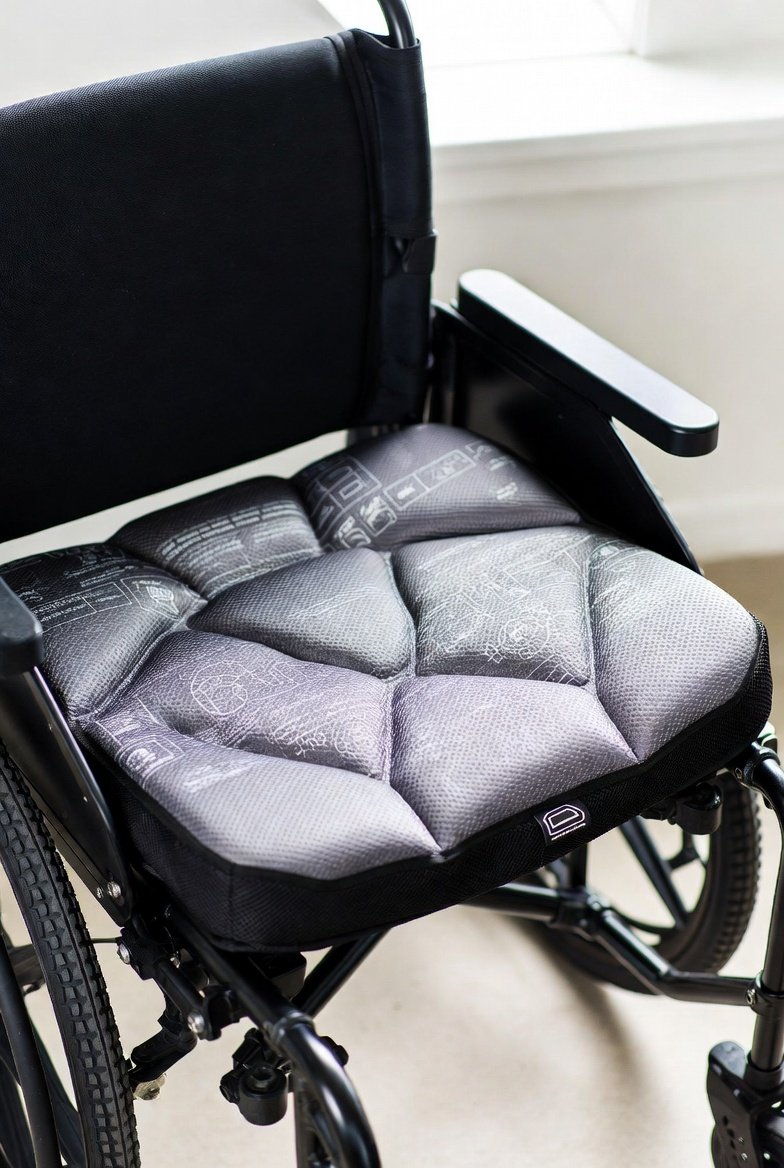
Air Wheelchair Seat Cushion Reviews (User Experience)
What Users Commonly Like
- Strong pressure redistribution when properly adjusted
- Adjustable firmness (tuned to preference and risk)
- Often preferred by users with skin sensitivity or prior breakdown
Air cushions frequently show up in “this finally helped” stories — especially when pressure risk is the real issue.
Common Complaints
- Instability if over- or under-inflated
- Daily setup expectations
- Anxiety about leaks or punctures
Real-world pattern: Air cushions perform best when treated like equipment — maintained consistently, sized correctly, and adjusted confidently.
Hybrid Wheelchair Seat Cushion Reviews (User Experience)
What Users Commonly Like
- Balanced comfort + stability
- Less daily attention than full air
- More pressure relief than basic foam
Hybrids often appeal to users who want fewer extremes — not the softest, not the most technical.
Common Complaints
- Higher cost
- Heavier than foam
- Not specialized enough for complex medical needs
Long-term pattern: Hybrids are often described as “quietly effective” — good all-around performance with fewer deal-breakers.
Micro Case Snapshots (Real Sitting Patterns)
Case 1 — Late-Day Fatigue Shift
A daily 8-hour sitter moved from basic foam to a structured hybrid and reported less late-day soreness while keeping transfers confident.
Case 2 — Pressure Awareness Upgrade
A caregiver transitioned a higher-risk user from gel to air. Comfort improved only after inflation checks became routine.
Case 3 — Stability Over Softness
An older adult abandoned gel after repeated transfer wobble and returned to foam — valuing predictability more than plushness.
Pattern: Equipment helps, but fit + routine determine outcomes.
Comfort Over Time — What Reviews Quietly Reveal
Comfort follows a timeline:
- Week 1: Almost anything feels “fine.”
- Week 2–4: Posture habits form; friction and heat patterns appear.
- Month 2–6: Material drift begins; small annoyances become daily.
- 6–12 months: True satisfaction becomes obvious.
Operator insight: Cushions rarely fail suddenly — they gradually stop matching the user.
Stability & Transfers (Caregiver Perspective)
Caregivers often prioritize:
- Firm, predictable surfaces
- Minimal shifting during transfers
- Lower handling weight
From a handling standpoint, foam and firmer hybrids tend to be easier than gel or air cushions that change shape under load.
Pressure Relief Feedback (Higher-Risk Users)
Higher-risk users frequently report:
- Better tolerance with air or advanced gel designs
- Less soreness when repositioning is consistent
- Cushion setup matters more than they expected
Critical note: No cushion replaces movement. Pressure relief is a system, not a feature.
Expert Seating Perspective
Seating assessments performed by occupational or rehabilitation specialists often evaluate three elements together:
Pelvic position → pressure distribution → support surface
Softness alone is rarely the priority. When posture improves, pressure distribution often improves with it.
Maintenance & Durability Patterns (What Reviews Repeat)
- Foam: predictable compression over time; replace when sagging becomes visible
- Gel: monitor distribution; performance drops when migration goes unchecked
- Air: highest daily attention; strongest pressure benefit when managed
- Hybrid: moderate upkeep; stable middle ground for many users
Users who prefer “set-and-forget” options tend to lean toward foam or structured hybrids.
Heat & Moisture Comfort (Where Complaints Come From)
Common review themes:
- Foam can trap heat in warm environments
- Gel may feel cooler initially but warms over long sitting
- Covers and airflow often matter more than material alone
Hidden truth: many “material complaints” are really cover and ventilation issues.
Why People Replace Cushions Sooner Than Expected
Most replacements happen due to drift, not defects:
- posture changes
- weight changes
- health status shifts
- material fatigue
- transfer routines evolving
Bodies evolve — seating surfaces must evolve too.
Decision Flow — Narrow Your Direction (Without Picking a Winner)
Daily Sitting Hours → Pressure Risk → Stability Needs → Maintenance Tolerance → Cushion Direction
- Short sitting + frequent transfers + low upkeep → foam
- Moderate sitting + pressure sensitivity + okay upkeep → gel or hybrid
- High pressure concern + long sitting + willing to adjust → air
- Mixed priorities + want balance → hybrid
Directional only — proper sizing and fit still win the outcome.
How This Page Fits the Cushion Cluster
This roundup summarizes real-world experience patterns.
For structured buying guidance and final selection logic, go here:
- best wheelchair cushion (Decision Owner)
- gel vs foam wheelchair cushion (materials behavior)
- wheelchair cushion for pressure sores (risk-limit page)
- wheelchair seating posture guide
FAQs
Are wheelchair seat cushion reviews reliable?
They help identify patterns, but individual comfort depends on fit, posture, and daily routine.
Which cushion type gets the best reviews overall?
There is no universal winner. Foam, gel, air, and hybrid cushions win in different contexts.
Do more expensive cushions always perform better?
No. A higher price does not guarantee better comfort or suitability.
How long should a cushion be tested before deciding?
Most users need at least 1–2 weeks of daily use to judge comfort accurately.
Can reviews replace professional seating assessments?
No. Reviews help expectations, but proper fitting and assessment matter most.
Why does a cushion feel good at first but worse later?
Because fatigue, posture drift, heat buildup, and pressure patterns emerge over time.
Do covers matter as much as cushion material?
Often yes. Cover breathability and friction can significantly change comfort and skin tolerance.