
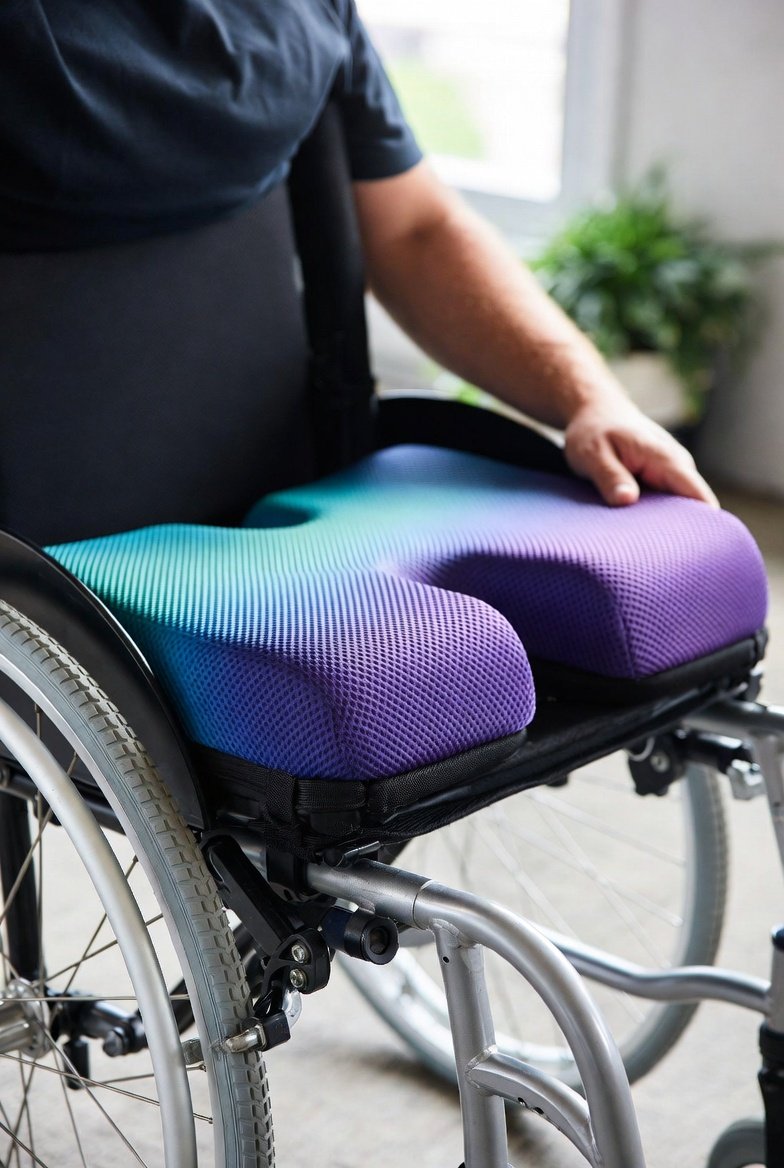
Best Wheelchair Cushion: How to Choose the Right Cushion for Comfort, Support, and Pressure Relief
A wheelchair cushion looks like a simple add-on — but it quietly determines comfort, posture, skin health, transfer safety, and daily endurance.
For many people, discomfort isn’t caused by the wheelchair frame. It comes from pressure points, pelvic tilt, sliding, heat buildup, or poor positioning — all of which are cushion problems first. Over time, the wrong cushion can lead to pain, numbness, fatigue, and (for higher-risk users) pressure injuries.
This guide helps you choose the best wheelchair cushion for your body and daily use. You’ll learn the key cushion types, who each type fits best, what features matter in real life, how much you should expect to pay, and how to avoid the buying mistakes that waste money and increase risk.
Why a Wheelchair Cushion Matters More Than Most People Realize
A wheelchair cushion isn’t “just padding.” A good cushion does four jobs at once:
- Pressure distribution: reduces concentrated pressure on bony areas (especially tailbone and sitting bones)
- Postural support: keeps the pelvis stable so the spine stays more aligned
- Comfort over time: reduces numbness, burning, and fatigue during longer sitting
- Stability and safety: limits sliding and improves control during reaching and transfers
A common pattern: someone buys a chair and still feels uncomfortable — then realizes the real solution was the cushion.
Who This Guide Is For
This is for:
- Seniors using a wheelchair part-time or daily
- Full-time sitters who spend hours seated
- People with back/hip discomfort from sitting
- Anyone with pressure sore risk (or prior redness/skin breakdown)
- Caregivers trying to make sitting and transfers safer
If you have diabetes, poor circulation, reduced sensation, or a history of pressure injuries, cushion choice can become a medical priority. In that case, it’s smart to treat the cushion like protective equipment, not comfort gear.
The 30-Second Answer: What’s Usually “Best” Depends on Your Risk
If you want the simplest “direction” before the details:
- Best for low risk + short sitting: quality foam or hybrid foam
- Best for moderate risk + daily sitting: gel or hybrid
- Best for high risk + long sitting: air-cell (or advanced medical-grade hybrid)
- Best for transfers + stability: hybrid or firmer contoured designs
Now let’s make that choice correctly.
Main Types of Wheelchair Cushions (What Actually Changes Between Them)
Foam Wheelchair Cushions
Foam cushions are the most common starting point because they’re simple, light, and affordable.
Best for:
- Short to moderate sitting time
- Users without high pressure-risk
- People who want low maintenance
- Travel and lightweight setups
Limitations:
- Foam compresses over time
- Pressure redistribution is limited (especially for longer sitting)
- Heat buildup can increase discomfort
- Lower-end foam “bottoms out” faster
Quick verdict: Best for basic comfort — not the top choice for long daily sitting or pressure-risk users.
Gel Wheelchair Cushions
Gel cushions use gel packs or gel layers to distribute weight and soften pressure points.
Best for:
- Moderate pressure relief needs
- Users sensitive to firm surfaces
- Those who want more comfort than foam
- People who sit for longer blocks of time
Limitations:
- Heavier than foam
- Gel can shift if the design is poor
- Temperature sensitivity (can feel cold/hot at first)
- Some users feel less stable than with firmer bases
Quick verdict: A strong upgrade from foam for comfort — but stability depends heavily on design.
Air Wheelchair Cushions (Air-Cell / Adjustable Air)
Air cushions use interconnected air cells that can be adjusted to distribute pressure more evenly.
Best for:
- High pressure sore risk
- Long daily sitting durations
- Users who need customized pressure distribution
- People with reduced sensation who need serious pressure management
Limitations:
- Requires setup and occasional adjustment
- Can feel “wobbly” to some users
- More maintenance than foam/gel
- Incorrect inflation can reduce effectiveness
Quick verdict: Best pressure relief potential — but only if set up correctly and the user tolerates the feel.
Hybrid Cushions (Foam + Gel or Foam + Air)
Hybrid cushions combine materials to balance comfort, stability, and pressure management.
Best for:
- Users who want pressure relief without “air wobble”
- Daily sitters who also need stable transfers
- Mixed indoor/outdoor use
- People who want a practical middle ground
Limitations:
- Higher cost
- Heavier than basic foam
- Not as “max pressure relief” as full air (depending on model)
Quick verdict: Often the best all-around choice for daily use when you need both comfort and stability.
Wheelchair Cushion Types Compared (Fast Decision Table)
Cushion Type | Pressure Relief | Stability | Maintenance | Weight | Best Fit |
Foam | Low–Moderate | High | Very Low | Low | Short sitting, low risk, travel |
Gel | Moderate | Moderate | Low | Medium–High | Comfort upgrade, moderate risk |
Air | High | Low–Moderate | Moderate | Low–Medium | High risk, long sitting |
Hybrid | Moderate–High | High | Low–Moderate | Medium | Daily use, balance + transfers |
If you’re stuck between two: pick based on pressure risk first, then transfer stability.
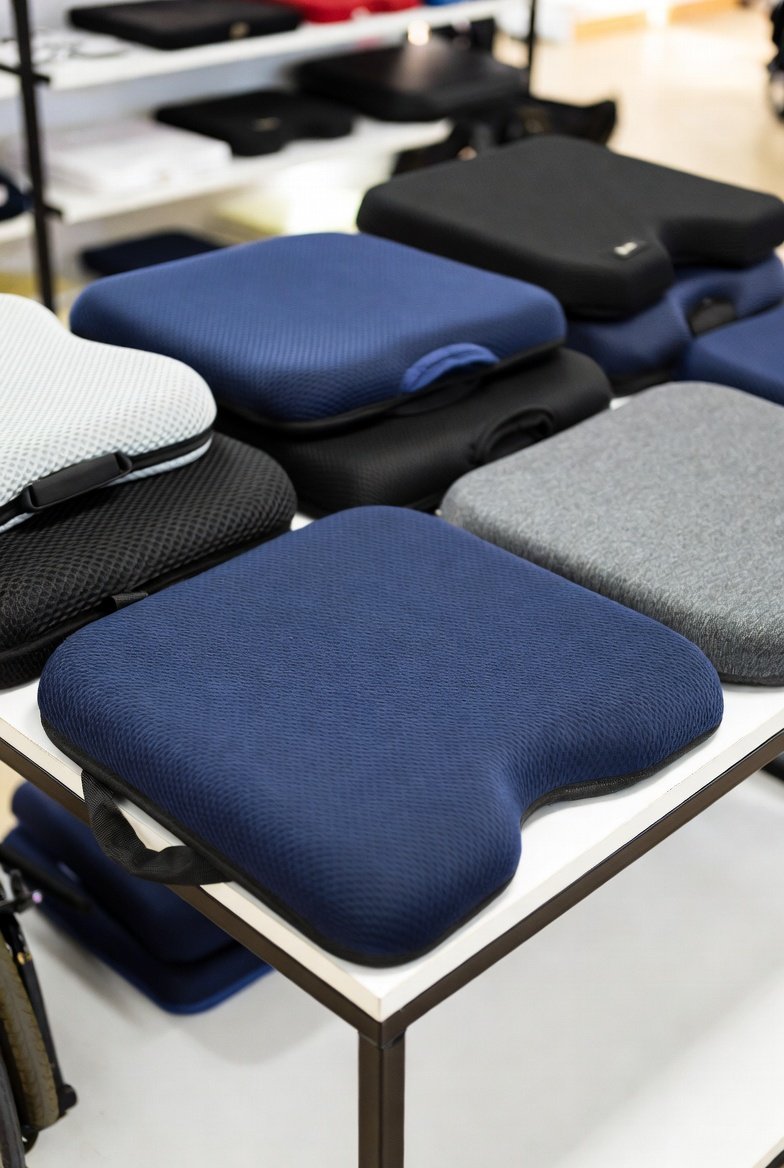
How to Choose the Best Wheelchair Cushion (Decision Framework)
1) How Long Do You Sit Each Day?
Time seated changes everything.
- Under ~4 hours/day: foam or hybrid usually works
- 4–6 hours/day: gel or hybrid becomes more relevant
- 6+ hours/day: air-cell or advanced hybrid is typically safer
If sitting time is long, comfort becomes a skin health question — not just a “feels nice” question.
2) Is Pressure Relief a Medical Priority?
Pressure risk isn’t only for hospital patients. Risk rises with:
- Reduced sensation or nerve issues
- Diabetes or circulation problems
- Thin body frame (less natural padding)
- History of redness, skin breakdown, or sores
- Long uninterrupted sitting time
If you’ve had pressure sores or persistent redness: air-cell or advanced pressure-relief designs become the safer direction.
3) Do You Need Stability for Transfers and Posture?
Some cushions feel great but make transfers harder.
You may need more stability if you:
- Transfer frequently (bed, toilet, car, chair)
- Lean or reach often while seated
- Have balance concerns
- Slide forward easily
In these cases, hybrid or contoured foam-based designs often outperform pure air in day-to-day practicality.
4) Maintenance Tolerance (Be Honest Here)
Maintenance isn’t hard — but it’s real.
- Lowest maintenance: foam
- Low maintenance: gel
- Most setup-sensitive: air
- Balanced: hybrid
If the cushion requires consistent adjustment but nobody will do it, it’s not the “best” cushion for that household — even if the technology is superior.
Home & Lifestyle Fit Checklist (Critical Layer)
Before you buy, run this fast checklist. It prevents most mismatches:
- Seat size match: cushion must match seat width/depth (too small slides; too large buckles)
- Transfer behavior: very soft cushions can make transfers unstable
- Heat and sweat: breathability matters in warm climates
- Sliding risk: smooth covers can increase forward sliding
- Repositioning needs: if the user can’t shift weight often, pressure relief matters more
- Caregiver involvement: stability affects safe assisted transfers
A cushion can feel fine for five minutes and fail after two hours. Real-world comfort is always time-tested.
What Drives Wheelchair Cushion Prices Up (And What’s Worth It)
What usually justifies higher prices
- Better pressure redistribution technology
- Materials that resist “bottoming out”
- Durable covers and stronger seams
- Medical-grade designs for higher-risk users
- Adjustable systems that can be tuned
What’s often not worth paying extra for
- Excess thickness without support structure
- Marketing features that don’t match your risk level
- Heavy add-ons that reduce portability without improving fit
Rule: match cost to risk. Low risk doesn’t need medical-grade complexity. High risk shouldn’t rely on basic foam.
Typical Cost Range (Realistic Expectations)
These are common purchase ranges:
- Foam: ~$25–$80
- Gel: ~$60–$150
- Hybrid: ~$100–$250
- Air-cell: ~$150–$400+
Higher end tends to show up when pressure management becomes a protective priority.
Common Mistakes When Buying a Wheelchair Cushion
Avoid these — they cause most returns and discomfort complaints:
- Buying based on softness alone
- Ignoring seat dimensions (width/depth mismatch)
- Underestimating daily sitting time
- Choosing air without willingness to adjust properly
- Ignoring transfer stability needs
- Waiting too long after seeing skin redness
Comfort is not the only goal. Fit and protection matter more over time.
When a Cushion Upgrade Becomes Necessary
Consider upgrading if any of these show up:
- Numbness, burning, or “pins and needles” after sitting
- Persistent redness that lasts after standing up
- Increased pain in hips, tailbone, or lower back
- More sliding forward or worsening posture
- Reduced sitting endurance compared to earlier months
A common truth: when comfort declines, the cushion is often the first thing to fix — not the chair.
Recommended “Best” Picks by Situation (No Brand Bias)
Because this page is the decision owner, here are practical recommendations by use-case:
- Best for short daily sitting + low risk: quality foam (or basic hybrid)
- Best for daily comfort without complicated setup: hybrid
- Best for pressure sore risk or full-day sitting: air-cell
- Best for transfers + posture stability: hybrid or contoured foam-based designs
- Best for “I want softer than foam” comfort: gel or hybrid
1-line decision matrix: Best stability = hybrid, best pressure relief = air, best budget = foam, best comfort upgrade = gel/hybrid.
How This Page Fits the Bigger Mobility Decision
This page is the final authority for cushion selection in your mobility cluster.
Once cushion fit is solved, daily wheelchair life becomes easier — because pressure, posture, and endurance improve without changing the chair.
If you’re specifically dealing with skin risk or sore prevention, the next step is:
wheelchair cushion for pressure sores
And if you want broader context around mobility choices for older adults:
FAQs
What is the best wheelchair cushion for pressure sores?
Air-cell cushions (and some advanced medical-grade gel/hybrid cushions) are commonly favored for pressure relief, especially for high-risk users who sit for long periods.
Do wheelchair cushions fit all chairs?
No. Cushions must match the wheelchair seat width and depth. A mismatch can cause sliding, poor posture, and uneven pressure.
How often should a wheelchair cushion be replaced?
Many cushions last about 1–3 years, depending on material, body weight, and daily sitting time. Foam often compresses sooner with heavy daily use.
Is a thicker cushion always better?
No. Thickness without proper support can reduce stability, increase sliding, and make transfers harder. Fit and structure matter more than thickness.