
![SEO Title: Best Hospital Bed for Elderly: How to Choose the Right Bed for Comfort, Safety, and Home Use Meta Description: Choosing the best hospital bed for elderly care at home? Learn what actually matters for comfort, safety, adjustability, caregiver ease, and long-term use—without overpaying. URL Slug: /best-hospital-bed-for-elderly Canonical URL: https://yourdomain.com/best-hospital-bed-for-elderly H1: Best Hospital Bed for Elderly: How to Choose the Right Bed for Comfort, Safety, and Home Use Best Hospital Bed for Elderly: How to Choose the Right Bed for Comfort, Safety, and Home Use Choosing a hospital bed for an elderly family member is rarely just about furniture — it is about safety, dignity, sleep quality, and the physical realities of caregiving. Many families realize too late that a traditional bed quietly becomes a hazard. Transfers grow harder. Nighttime bathroom trips become risky. Caregivers strain their backs. Sleep quality declines. The right hospital bed prevents these problems before they escalate. This guide explains how to confidently choose the best hospital bed for elderly care at home — based on real daily use rather than marketing language — so you can make a decision that protects both the senior and the caregiver. What Is the Best Hospital Bed for Elderly People? (Quick Answer) For most long-term home care situations, fully electric hospital beds are the safest and most practical choice. They allow effortless height adjustment, reduce caregiver strain, and support safer transfers — three factors strongly associated with fall prevention. However, the best choice always depends on mobility level, caregiving intensity, and expected duration of use. Quick Decision Guide: Which Hospital Bed Should You Choose? If you want immediate clarity, start here. Choose a fully electric hospital bed if: Mobility is significantly limited Caregivers assist daily Transfers are becoming difficult Long-term use is expected Fall risk is increasing Choose a semi-electric bed if: The user still has partial independence Position changes are helpful but not constant Budget matters, but safety remains important Choose a manual bed if: The need is temporary Adjustments are rare A caregiver can safely operate cranks When families regret a purchase, it is usually because they underestimated how quickly needs can evolve. Planning slightly ahead often prevents another disruptive equipment change later. Who Actually Needs a Hospital Bed at Home A hospital bed is not reserved for advanced illness. Many seniors benefit from one due to: Reduced strength or balance Difficulty entering or exiting a traditional bed Chronic pain or joint stiffness Respiratory conditions that improve with elevation Increased nighttime fall risk Caregiver-assisted repositioning Falls during bed exit remain one of the most common injury pathways among older adults — and improper bed height is often the overlooked trigger. When a standard bed no longer supports safe movement, a hospital bed becomes a protective intervention rather than a medical extreme. When a Hospital Bed May NOT Be Necessary Not every older adult requires one — and recognizing this leads to smarter, more individualized care. A hospital bed may be unnecessary when: Mobility remains strong Pain is mild and controlled Transfers are stable Caregiving needs are minimal The change would create emotional resistance In these cases, supportive mattresses, mobility rails, or adjustable bases may provide adequate assistance without transforming the bedroom environment. Choosing appropriately is not about doing more. It is about doing what meaningfully improves safety. What Makes a Hospital Bed Different From a Regular Bed Hospital beds prioritize access, positioning, and injury prevention over aesthetics. Key differences include: Adjustable head and foot sections Height control for safer transfers Compatibility with medical accessories Open frame design for caregiver approach These features exist because care happens around the bed — not just on it. Types of Hospital Beds for Elderly Use Manual Hospital Beds Manual beds rely on hand cranks. Best for: Short-term recovery Limited repositioning needs Budget-sensitive households Limitations: Physical effort required Slower adjustments Increased caregiver strain Manual beds function reliably, but they rarely remain ideal as care needs grow. Semi-Electric Hospital Beds Semi-electric beds motorize head and foot elevation while height remains manual. Best for: Moderate daily use Improving comfort without full automation Limitation: Caregivers still handle height adjustments, which can become tiring over time. Fully Electric Hospital Beds Fully electric beds adjust height and positioning with a remote. Why they are often best for elderly users: Reduce caregiver back injuries Enable safer transfers Support independence Allow faster nighttime adjustments Caregivers frequently discover that raising the bed to working height prevents months — sometimes years — of physical strain. Manual vs Semi-Electric vs Fully Electric (Quick Comparison) Feature Manual Semi-Electric Fully Electric Ease of use Low Moderate High Caregiver strain High Medium Low Transfer safety Basic Better Best Long-term suitability Poor Good Excellent Independence support Minimal Moderate Strong For ongoing elderly care, this comparison often points clearly toward fully electric models. Key Features That Matter Most for Elderly Users Height Adjustability — A Major Safety Lever Lower beds reduce fall severity. Higher beds protect caregivers during transfers. Many home injuries occur not because a bed failed — but because it sat at the wrong height. Head and Foot Elevation Elevation supports: Circulation Breathing Pressure redistribution Comfortable reading or eating Smooth adjustments matter far more than extreme angles. Weight Capacity Always verify capacity. A stronger frame improves stability and longevity — both essential in equipment used every day. Side Rails — Use With Judgment Side rails can: Support repositioning Prevent accidental roll-outs But they should never function as restraints. Rails must align with the user’s mobility and awareness level. Comfort Reality: The Mattress Often Matters More Than the Frame A hospital bed enables movement — the mattress determines restorative sleep. Common options include: High-density foam Pressure-relief surfaces Alternating pressure systems Hybrid medical foam Pressure injuries can develop quietly when support is inadequate. The right mattress protects skin integrity while improving sleep quality. (For deeper guidance, see hospital bed mattress.) Biggest Fear Families Have Before Buying Many families hesitate — not because they doubt the benefits, but because the decision feels symbolic. Common concerns include: “Will the room feel clinical?” “Is this a sign health is declining?” “Will insurance help?” “Are we acting too early?” In reality, hospital beds often extend independence rather than reduce it. When movement becomes easier and safer, confidence frequently improves. Home Fit Checklist (Often Overlooked) Before ordering, confirm: Room clearance Delivery path through doorways Nearby electrical outlets Flooring stability Space for caregivers on both sides Installation complications are far more stressful than proactive planning. Caregiver Reality: Why Bed Choice Matters More Than You Think Caregiving often involves repositioning every two to four hours, assisting bathroom trips, and preventing unsafe nighttime movement. Over time, poor ergonomics lead to caregiver fatigue — and back injuries are among the leading reasons home care arrangements collapse. A supportive bed protects two people, not one. Hospital Bed Rental vs Buying This decision is frequently overlooked until late in the process. Renting may make sense when: Recovery is expected The need is temporary Financial flexibility is important Buying often makes sense when: Care will extend many months Adjustments are frequent Stability is preferred If the timeline is uncertain, compare long-term rental costs carefully — they can quietly exceed purchase prices. Cost Reality: What Actually Drives Price Pricing typically reflects: Electric capability Structural strength Warranty coverage Included accessories Features that improve safety usually justify their cost. What is often unnecessary: Cosmetic upgrades Overly complex controls Non-essential add-ons Function should always outrank appearance in home care environments. (You may also want to review does medicare cover hospital beds for coverage insight.) Hospital Bed vs Adjustable Bed Adjustable beds focus on comfort. Hospital beds focus on care. Hospital beds typically provide: Greater height range Medical accessory compatibility Stronger structural support For elderly safety, these differences are not minor — they are decisive. Common Mistakes When Buying Avoid decisions based solely on price. Other frequent missteps include: Ignoring mattress compatibility Overusing side rails Underestimating caregiver workload Buying for today instead of the coming year The wrong bed often reveals itself quickly — through difficult transfers, disrupted sleep, and preventable falls. How to Choose the Best Hospital Bed for Elderly Care Ask: Can the user adjust the bed independently? Are transfers safe at current height? Will caregiving demands increase? Is long-term use likely? If independence, safety, and caregiver protection are priorities, fully electric beds typically provide the strongest long-term solution. How This Page Fits the Hospital Bed Cluster This page serves as the final decision authority for selecting a hospital bed for elderly users. Supporting pages explain costs, mattresses, and coverage — this guide exists to help you choose with confidence. (Optional: explore hospital bed for home use for broader setup guidance.) FAQs What is the best hospital bed for elderly people at home? Fully electric beds are generally the safest option because they simplify adjustments, reduce fall risk, and protect caregivers from strain. Do elderly people always need hospital beds? No — but when mobility declines or caregiving increases, they often become one of the most effective safety upgrades available. Can Medicare cover hospital beds? Coverage is sometimes available when medical necessity is documented and eligibility criteria are met. Is a hospital bed better than an adjustable bed for seniors? For caregiving and safety, yes. Adjustable beds prioritize comfort rather than medical support. How long do hospital beds last? Quality models commonly last many years when properly used and maintained. 🧩 Block B — Deployment Assets Internal Linking Plan Early contextual link: does medicare cover hospital beds Mid-article link: hospital bed mattress Late optional link: hospital bed for home use (No links to wheelchair or cushion clusters.) Image Notes (VA-Ready) Images Needed: Fully electric hospital bed placed in a residential bedroom Elderly user adjusting the bed with a remote Close-up showing height adjustment and side rails Alt-Text Rules: “hospital bed for elderly” “electric hospital bed for home” “adjustable hospital bed safety” Schema (Enhanced JSON-LD — Article + FAQ + Breadcrumb) { "@context": "https://schema.org", "@graph": [ { "@type": "Article", "@id": "https://yourdomain.com/best-hospital-bed-for-elderly#article", "headline": "Best Hospital Bed for Elderly: How to Choose the Right Bed for Comfort, Safety, and Home Use", "description": "Choosing the best hospital bed for elderly care at home? Learn what actually matters for comfort, safety, adjustability, caregiver ease, and long-term use.", "author": { "@type": "Person", "name": "Senior Care Advisor" }, "publisher": { "@type": "Organization", "name": "Senior Home Safety Hub", "logo": { "@type": "ImageObject", "url": "https://yourdomain.com/logo.png" } }, "datePublished": "2026-01-01", "dateModified": "2026-01-01", "mainEntityOfPage": { "@type": "WebPage", "@id": "https://yourdomain.com/best-hospital-bed-for-elderly" }, "image": "https://yourdomain.com/images/hospital-bed-elderly.jpg", "keywords": [ "best hospital bed for elderly", "hospital bed for seniors", "electric hospital bed for home", "hospital bed buying guide" ] }, { "@type": "FAQPage", "@id": "https://yourdomain.com/best-hospital-bed-for-elderly#faq", "mainEntity": [ { "@type": "Question", "name": "What is the best hospital bed for elderly people at home?", "acceptedAnswer": { "@type": "Answer", "text": "Fully electric hospital beds are typically the safest option because they simplify adjustments, reduce fall risk, and protect caregivers from strain." } }, { "@type": "Question", "name": "Do elderly people always need hospital beds?", "acceptedAnswer": { "@type": "Answer", "text": "No. However, when mobility declines or caregiving increases, a hospital bed often becomes one of the most effective safety upgrades available." } }, { "@type": "Question", "name": "Can Medicare cover hospital beds?", "acceptedAnswer": { "@type": "Answer", "text": "Coverage may be available when medical necessity is documented and eligibility criteria are met." } }, { "@type": "Question", "name": "Is a hospital bed better than an adjustable bed for seniors?", "acceptedAnswer": { "@type": "Answer", "text": "For caregiving and safety, yes. Hospital beds provide greater height range and medical support features." } } ] }, { "@type": "BreadcrumbList", "@id": "https://yourdomain.com/best-hospital-bed-for-elderly#breadcrumb", "itemListElement": [ { "@type": "ListItem", "position": 1, "name": "Home", "item": "https://yourdomain.com" }, { "@type": "ListItem", "position": 2, "name": "Hospital Beds", "item": "https://yourdomain.com/hospital-beds" }, { "@type": "ListItem", "position": 3, "name": "Best Hospital Bed for Elderly", "item": "https://yourdomain.com/best-hospital-bed-for-elderly" } ] } ] }](https://seniorhomesafetyhub.com/wp-content/uploads/2026/02/download-2026-02-10T003806.724.jpg "Best Hospital Bed for Elderly: How to Choose the Right Bed for Comfort, Safety, and Home Use")
Lorem ipsum dolor sit amet, consectetur adipiscing elit. Ut elit tellus, luctus nec ullamcorper mattis, pulvinar dapibus leo.

Best Hospital Bed for Elderly: How to Choose the Right Bed for Comfort, Safety, and Home Use
Choosing a hospital bed for an elderly family member is rarely just about furniture — it is about safety, dignity, sleep quality, and the physical realities of caregiving.
Many families realize too late that a traditional bed quietly becomes a hazard. Transfers grow harder. Nighttime bathroom trips become risky. Caregivers strain their backs. Sleep quality declines.
The right hospital bed prevents these problems before they escalate.
This guide explains how to confidently choose the best hospital bed for elderly care at home — based on real daily use rather than marketing language — so you can make a decision that protects both the senior and the caregiver.
What Is the Best Hospital Bed for Elderly People? (Quick Answer)
For most long-term home care situations, fully electric hospital beds are the safest and most practical choice. They allow effortless height adjustment, reduce caregiver strain, and support safer transfers — three factors strongly associated with fall prevention.
However, the best choice always depends on mobility level, caregiving intensity, and expected duration of use.
Quick Decision Guide: Which Hospital Bed Should You Choose?
If you want immediate clarity, start here.
Choose a fully electric hospital bed if:
- Mobility is significantly limited
- Caregivers assist daily
- Transfers are becoming difficult
- Long-term use is expected
- Fall risk is increasing
Choose a semi-electric bed if:
- The user still has partial independence
- Position changes are helpful but not constant
- Budget matters, but safety remains important
Choose a manual bed if:
- The need is temporary
- Adjustments are rare
- A caregiver can safely operate cranks
When families regret a purchase, it is usually because they underestimated how quickly needs can evolve. Planning slightly ahead often prevents another disruptive equipment change later.
Who Actually Needs a Hospital Bed at Home
A hospital bed is not reserved for advanced illness. Many seniors benefit from one due to:
- Reduced strength or balance
- Difficulty entering or exiting a traditional bed
- Chronic pain or joint stiffness
- Respiratory conditions that improve with elevation
- Increased nighttime fall risk
- Caregiver-assisted repositioning
Falls during bed exit remain one of the most common injury pathways among older adults — and improper bed height is often the overlooked trigger.
When a standard bed no longer supports safe movement, a hospital bed becomes a protective intervention rather than a medical extreme.
When a Hospital Bed May NOT Be Necessary
Not every older adult requires one — and recognizing this leads to smarter, more individualized care.
A hospital bed may be unnecessary when:
- Mobility remains strong
- Pain is mild and controlled
- Transfers are stable
- Caregiving needs are minimal
- The change would create emotional resistance
In these cases, supportive mattresses, mobility rails, or adjustable bases may provide adequate assistance without transforming the bedroom environment.
Choosing appropriately is not about doing more. It is about doing what meaningfully improves safety.
What Makes a Hospital Bed Different From a Regular Bed
Hospital beds prioritize access, positioning, and injury prevention over aesthetics.
Key differences include:
- Adjustable head and foot sections
- Height control for safer transfers
- Compatibility with medical accessories
- Open frame design for caregiver approach
These features exist because care happens around the bed — not just on it.
Best Hospital Bed for Elderly: How to Choose the Right Bed for Comfort, Safety, and Home Use
Choosing a hospital bed for an elderly family member is rarely just about furniture — it is about safety, dignity, sleep quality, and the physical realities of caregiving.
Many families realize too late that a traditional bed quietly becomes a hazard. Transfers grow harder. Nighttime bathroom trips become risky. Caregivers strain their backs. Sleep quality declines.
The right hospital bed prevents these problems before they escalate.
This guide explains how to confidently choose the best hospital bed for elderly care at home — based on real daily use rather than marketing language — so you can make a decision that protects both the senior and the caregiver.
What Is the Best Hospital Bed for Elderly People? (Quick Answer)
For most long-term home care situations, fully electric hospital beds are the safest and most practical choice. They allow effortless height adjustment, reduce caregiver strain, and support safer transfers — three factors strongly associated with fall prevention.
However, the best choice always depends on mobility level, caregiving intensity, and expected duration of use.
Quick Decision Guide: Which Hospital Bed Should You Choose?
If you want immediate clarity, start here.
Choose a fully electric hospital bed if:
- Mobility is significantly limited
- Caregivers assist daily
- Transfers are becoming difficult
- Long-term use is expected
- Fall risk is increasing
Choose a semi-electric bed if:
- The user still has partial independence
- Position changes are helpful but not constant
- Budget matters, but safety remains important
Choose a manual bed if:
- The need is temporary
- Adjustments are rare
- A caregiver can safely operate cranks
When families regret a purchase, it is usually because they underestimated how quickly needs can evolve. Planning slightly ahead often prevents another disruptive equipment change later.
Who Actually Needs a Hospital Bed at Home
A hospital bed is not reserved for advanced illness. Many seniors benefit from one due to:
- Reduced strength or balance
- Difficulty entering or exiting a traditional bed
- Chronic pain or joint stiffness
- Respiratory conditions that improve with elevation
- Increased nighttime fall risk
- Caregiver-assisted repositioning
Falls during bed exit remain one of the most common injury pathways among older adults — and improper bed height is often the overlooked trigger.
When a standard bed no longer supports safe movement, a hospital bed becomes a protective intervention rather than a medical extreme.
When a Hospital Bed May NOT Be Necessary
Not every older adult requires one — and recognizing this leads to smarter, more individualized care.
A hospital bed may be unnecessary when:
- Mobility remains strong
- Pain is mild and controlled
- Transfers are stable
- Caregiving needs are minimal
- The change would create emotional resistance
In these cases, supportive mattresses, mobility rails, or adjustable bases may provide adequate assistance without transforming the bedroom environment.
Choosing appropriately is not about doing more. It is about doing what meaningfully improves safety.
What Makes a Hospital Bed Different From a Regular Bed
Hospital beds prioritize access, positioning, and injury prevention over aesthetics.
Key differences include:
- Adjustable head and foot sections
- Height control for safer transfers
- Compatibility with medical accessories
- Open frame design for caregiver approach
These features exist because care happens around the bed — not just on it.
Types of Hospital Beds for Elderly Use
Manual Hospital Beds
Manual beds rely on hand cranks.
Best for:
- Short-term recovery
- Limited repositioning needs
- Budget-sensitive households
Limitations:
- Physical effort required
- Slower adjustments
- Increased caregiver strain
Manual beds function reliably, but they rarely remain ideal as care needs grow.
Semi-Electric Hospital Beds
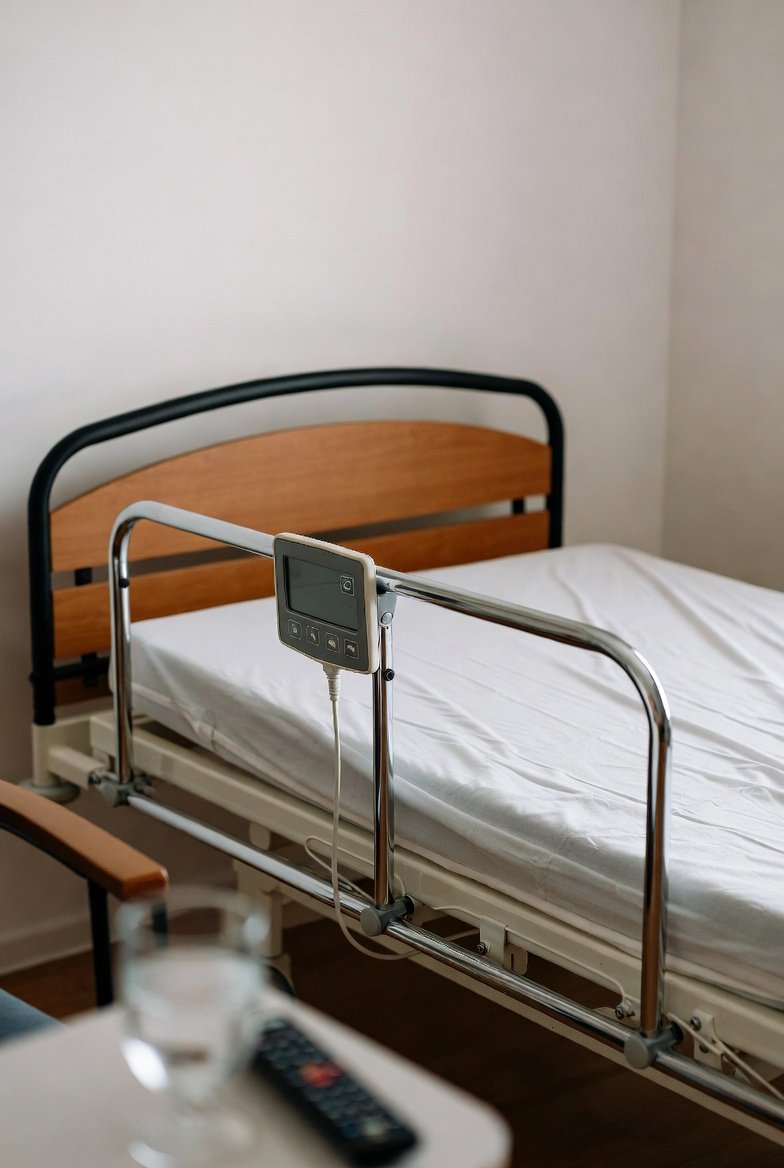
Semi-electric beds motorize head and foot elevation while height remains manual.
Best for:
- Moderate daily use
- Improving comfort without full automation
Limitation:
Caregivers still handle height adjustments, which can become tiring over time.
Fully Electric Hospital Beds
Fully electric beds adjust height and positioning with a remote.
Why they are often best for elderly users:
- Reduce caregiver back injuries
- Enable safer transfers
- Support independence
- Allow faster nighttime adjustments
Caregivers frequently discover that raising the bed to working height prevents months — sometimes years — of physical strain.
Manual vs Semi-Electric vs Fully Electric (Quick Comparison)
Feature | Manual | Semi-Electric | Fully Electric |
Ease of use | Low | Moderate | High |
Caregiver strain | High | Medium | Low |
Transfer safety | Basic | Better | Best |
Long-term suitability | Poor | Good | Excellent |
Independence support | Minimal | Moderate | Strong |
For ongoing elderly care, this comparison often points clearly toward fully electric models.
Key Features That Matter Most for Elderly Users
Height Adjustability — A Major Safety Lever
Lower beds reduce fall severity. Higher beds protect caregivers during transfers.
Many home injuries occur not because a bed failed — but because it sat at the wrong height.
Head and Foot Elevation
Elevation supports:
- Circulation
- Breathing
- Pressure redistribution
- Comfortable reading or eating
Smooth adjustments matter far more than extreme angles.
Weight Capacity
Always verify capacity. A stronger frame improves stability and longevity — both essential in equipment used every day.
Side Rails — Use With Judgment
Side rails can:
- Support repositioning
- Prevent accidental roll-outs
But they should never function as restraints. Rails must align with the user’s mobility and awareness level.
Comfort Reality: The Mattress Often Matters More Than the Frame
A hospital bed enables movement — the mattress determines restorative sleep.
Common options include:
- High-density foam
- Pressure-relief surfaces
- Alternating pressure systems
- Hybrid medical foam
Pressure injuries can develop quietly when support is inadequate. The right mattress protects skin integrity while improving sleep quality.
(For deeper guidance, see hospital bed mattress.)
Biggest Fear Families Have Before Buying
Many families hesitate — not because they doubt the benefits, but because the decision feels symbolic.
Common concerns include:
- “Will the room feel clinical?”
- “Is this a sign health is declining?”
- “Will insurance help?”
- “Are we acting too early?”
In reality, hospital beds often extend independence rather than reduce it. When movement becomes easier and safer, confidence frequently improves.
Home Fit Checklist (Often Overlooked)
Before ordering, confirm:
- Room clearance
- Delivery path through doorways
- Nearby electrical outlets
- Flooring stability
- Space for caregivers on both sides
Installation complications are far more stressful than proactive planning.
Caregiver Reality: Why Bed Choice Matters More Than You Think
Caregiving often involves repositioning every two to four hours, assisting bathroom trips, and preventing unsafe nighttime movement.
Over time, poor ergonomics lead to caregiver fatigue — and back injuries are among the leading reasons home care arrangements collapse.
A supportive bed protects two people, not one.
Hospital Bed Rental vs Buying
This decision is frequently overlooked until late in the process.
Renting may make sense when:
- Recovery is expected
- The need is temporary
- Financial flexibility is important
Buying often makes sense when:
- Care will extend many months
- Adjustments are frequent
- Stability is preferred
If the timeline is uncertain, compare long-term rental costs carefully — they can quietly exceed purchase prices.
Cost Reality: What Actually Drives Price
Pricing typically reflects:
- Electric capability
- Structural strength
- Warranty coverage
- Included accessories
Features that improve safety usually justify their cost.
What is often unnecessary:
- Cosmetic upgrades
- Overly complex controls
- Non-essential add-ons
Function should always outrank appearance in home care environments.
(You may also want to review does medicare cover hospital beds for coverage insight.)
Hospital Bed vs Adjustable Bed
Adjustable beds focus on comfort.
Hospital beds focus on care.
Hospital beds typically provide:
- Greater height range
- Medical accessory compatibility
- Stronger structural support
For elderly safety, these differences are not minor — they are decisive.
Common Mistakes When Buying
Avoid decisions based solely on price.
Other frequent missteps include:
- Ignoring mattress compatibility
- Overusing side rails
- Underestimating caregiver workload
- Buying for today instead of the coming year
The wrong bed often reveals itself quickly — through difficult transfers, disrupted sleep, and preventable falls.
How to Choose the Best Hospital Bed for Elderly Care
Ask:
- Can the user adjust the bed independently?
- Are transfers safe at current height?
- Will caregiving demands increase?
- Is long-term use likely?
If independence, safety, and caregiver protection are priorities, fully electric beds typically provide the strongest long-term solution.
How This Page Fits the Hospital Bed Cluster
This page serves as the final decision authority for selecting a hospital bed for elderly users.
Supporting pages explain costs, mattresses, and coverage — this guide exists to help you choose with confidence.
(Optional: explore hospital bed for home use for broader setup guidance.)
FAQs
What is the best hospital bed for elderly people at home?
Fully electric beds are generally the safest option because they simplify adjustments, reduce fall risk, and protect caregivers from strain.
Do elderly people always need hospital beds?
No — but when mobility declines or caregiving increases, they often become one of the most effective safety upgrades available.
Can Medicare cover hospital beds?
Coverage is sometimes available when medical necessity is documented and eligibility criteria are met.
Is a hospital bed better than an adjustable bed for seniors?
For caregiving and safety, yes. Adjustable beds prioritize comfort rather than medical support.
How long do hospital beds last?
Quality models commonly last many years when properly used and maintained.