
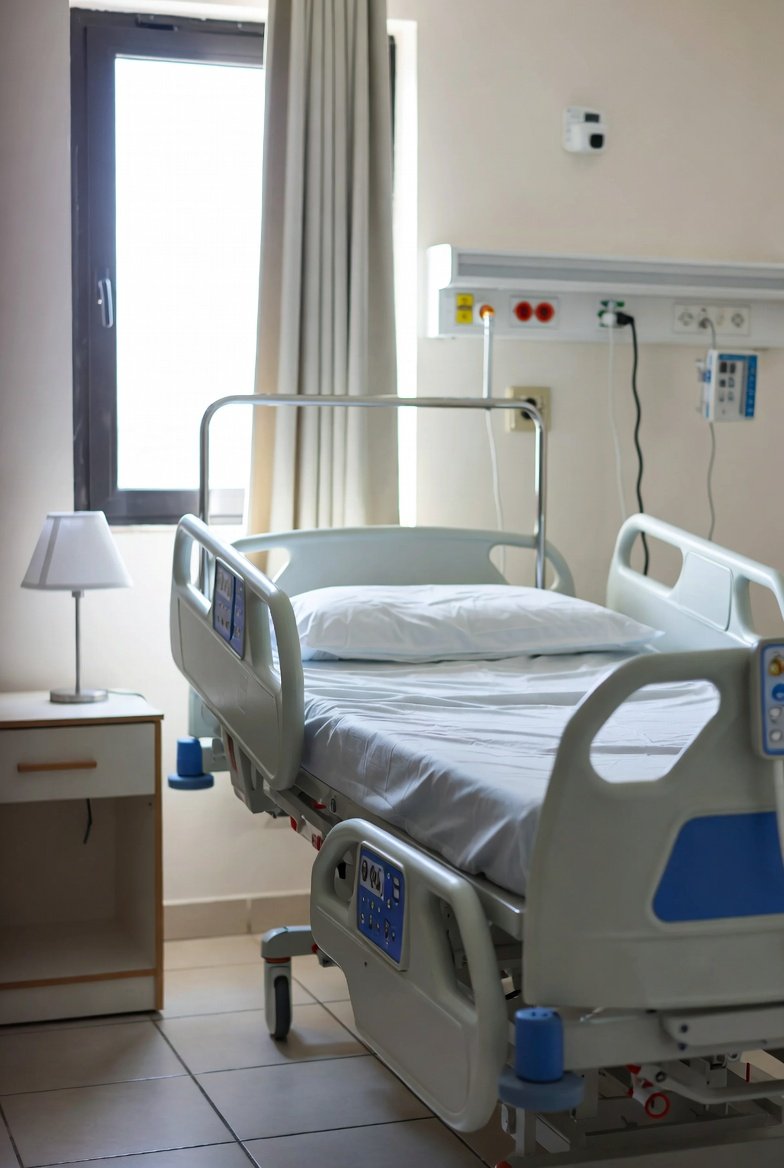
Hospital Bed vs Adjustable Bed: What’s the Real Difference for Home Care?
When caring for an elderly family member at home, one of the most common — and consequential — equipment decisions is choosing between a hospital bed and an adjustable bed. At a glance, they appear similar. Both elevate. Both reposition. Both promise comfort.
But choosing the wrong bed often isn’t recognized until the first difficult transfer — or worse, the first preventable fall.
These beds are engineered for entirely different realities.
This guide explains the practical, functional differences between a hospital bed and an adjustable bed. It does not recommend one over the other. Instead, it clarifies how each performs in real home-care scenarios so you can match equipment to actual needs rather than assumptions.
(If you are evaluating options for a specific care situation, see best hospital bed for elderly.)
Hospital Bed vs Adjustable Bed — Quick Comparison
Feature | Hospital Bed | Adjustable Bed |
Height adjustment | ✅ Yes | ❌ No |
Caregiver support | ✅ Built for assisted care | ❌ Limited |
Fall prevention | ✅ Strong safety focus | ⚠️ Minimal |
Medical accessories | ✅ Compatible | ❌ Not designed for them |
Mobility support | ✅ High | ⚠️ Moderate at best |
Aesthetic style | Clinical | Residential |
Primary purpose | Care delivery | Sleep comfort |
For many families, this table alone clarifies why the two beds are not interchangeable.
What a Hospital Bed Is Designed to Do
A hospital bed is engineered for care delivery, not visual appeal.
Its core purposes are to:
- Support limited mobility
- Enable caregiver-assisted repositioning
- Reduce fall risk
- Allow safer transfers
- Integrate with medical accessories
Every adjustment exists to make daily care safer and more manageable.
Home care professionals often view bed height as one of the most underestimated safety factors — because improper height quietly increases both fall risk and caregiver strain.
What an Adjustable Bed Is Designed to Do
An adjustable bed is built around personal comfort.
Its primary goals are to:
- Improve sleep positioning
- Reduce snoring or reflux
- Increase relaxation
- Enhance bedroom convenience
These are consumer sleep products — not care equipment.
They assume the user can move independently and safely.
The Mobility Progression Most Families Don’t Anticipate
Mobility decline rarely happens overnight.
It typically follows a gradual path:
Independent movement → mild assistance → regular transfers → caregiver-supported repositioning.
Beds chosen for comfort today are often expected to manage safety tomorrow — and not every bed can make that transition.
This is where the functional differences between these two bed types become far more than technical details.
They become safety variables.
Height Adjustability: The Biggest Functional Divide
Hospital Bed Height Range
Hospital beds can:
- Lower close to the floor to reduce fall injury severity
- Raise high enough for standing transfers
- Protect caregivers from excessive bending
Vertical adjustability is not a luxury feature — it is a foundational safety mechanism.
Many home-care injuries occur not because equipment failed, but because the working height was wrong.
Adjustable Bed Height Range
Most adjustable beds:
- Maintain a fixed platform height
- Elevate only the head and foot sections
- Provide little ergonomic support for caregivers
This limitation often becomes noticeable only after assistance is required.
Caregiver Access and Transfers
Hospital Beds
Hospital beds are intentionally structured to support assisted movement.
They:
- Allow side access
- Support pivot transfers
- Accommodate mobility aids
- Reduce caregiver bending
In care environments, the bed functions as a working platform — not just a place to sleep.
Adjustable Beds
Adjustable beds typically:
- Restrict side access
- Sit at non-adjustable heights
- Assume independent repositioning
- Increase caregiver strain during assistance
What feels comfortable during independent living can quickly become restrictive once help is needed.
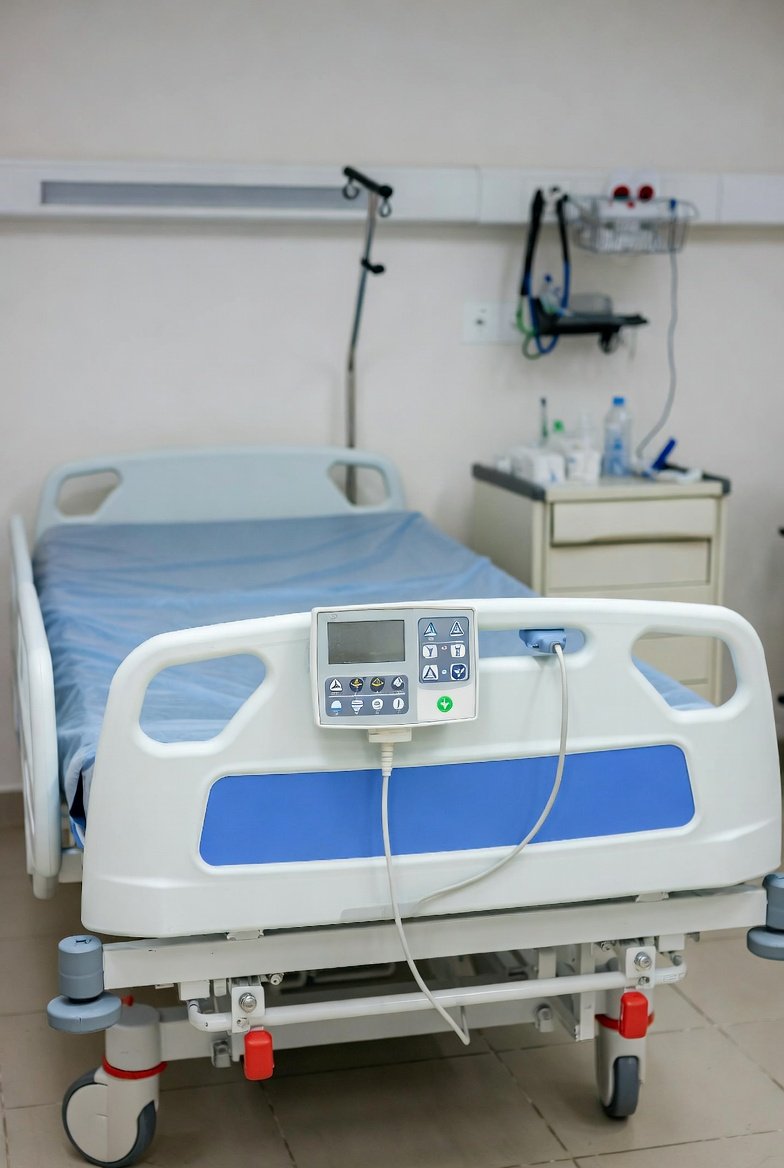
Real-World Scenario: Where the Difference Becomes Obvious
Consider a senior recovering from surgery.
Initially, an adjustable bed may provide enough comfort support. But if strength declines or transfers become unstable, the absence of height adjustment can turn routine movement into a safety risk.
Hospital beds are designed to adapt as needs change. Adjustable beds are not.
This distinction often becomes visible only after caregiving begins.
Side Rails and Safety Controls
Hospital Beds
Hospital beds:
- Accept true safety rails
- Offer partial or full configurations
- Use rails as mobility supports — not restraints
Rails are integrated into the broader safety system.
Adjustable Beds
Adjustable beds:
- Rarely support medical-grade rails
- May offer decorative guards
- Are not engineered for fall prevention
When nighttime disorientation or weakness appears, this difference matters.
Medical Accessories Compatibility
Hospital Beds Support:
- Overbed tables
- Trapeze bars
- IV poles
- Pressure-relief mattresses
- Bed alarms
These tools form part of a coordinated care environment.
Adjustable Beds Support:
- Consumer mattresses
- Massage motors
- USB charging
- Ambient lighting
The focus is lifestyle convenience rather than clinical function.
Mattress Compatibility and Skin Protection
Hospital beds typically require medical-grade mattresses that emphasize:
- Pressure redistribution
- Moisture resistance
- Cleanability
- Secure sizing
These factors directly influence skin health.
Adjustable beds prioritize comfort layers instead of pressure management — which may be perfectly appropriate for independent sleepers but less protective in assisted-care situations.
Room Fit and Installation Realities
Hospital Beds
- Delivered in modular pieces
- Designed for tighter access
- Easier to reposition
Adjustable Beds
- Often heavy, single-piece frames
- Difficult to relocate
- Less adaptable to changing room layouts
Flexibility becomes valuable when care needs evolve.
Noise, Controls, and Ease of Use
Hospital bed controls are typically:
- Simple
- Durable
- Easy to interpret
Adjustable bed remotes often include multiple presets and features that may confuse some elderly users.
In care settings, simplicity tends to outperform sophistication.
Why This Decision Often Feels Harder Than It Should
For many families, the hesitation is emotional rather than technical.
A hospital bed can feel like a visible acknowledgment that life is changing. Adjustable beds preserve the appearance of normalcy.
But equipment decisions are ultimately about risk management — not interior design.
Balancing emotional comfort with physical safety is part of thoughtful caregiving.
Aesthetics vs Function
Hospital beds prioritize function and may appear clinical.
Adjustable beds blend more easily into residential spaces.
This trade-off frequently shapes the decision — even when safety considerations are quietly more important.
Cost Structure Differences
Hospital beds generally involve:
- Higher upfront investment
- Durable construction
- Longer service life
Adjustable beds:
- Span wide price ranges
- Often bundle lifestyle features
- Offer limited medical utility
Price alone does not determine suitability.
(For deeper financial context, see hospital bed rental cost.)
Common Misconceptions That Lead to Poor Decisions
“Adjustable beds are basically hospital beds.”
They are not built for the same demands.
“Hospital beds are only for severe illness.”
They are frequently used to improve safety before conditions worsen.
“Height adjustment doesn’t matter.”
It often becomes one of the most important safety variables.
Misunderstandings tend to surface only after daily care begins.
How to Use This Comparison
This guide is designed to help you:
- Understand functional limits
- Anticipate mobility changes
- Match equipment to real care needs
- Avoid emotionally driven purchases
It does not recommend one bed over the other — because the correct choice depends entirely on the care environment.
Decision Boundaries (Where Each Bed Fits)
If a bed must:
- Support assisted transfers
- Reduce fall risk
- Protect caregivers
- Integrate with care tools
Then hospital-bed features become relevant.
If a bed is primarily used for:
- Independent sleep
- Mild positioning support
- Lifestyle comfort
Adjustable-bed features may be sufficient.
Matching the bed to the level of care is what ultimately prevents problems.
FAQs
Is a hospital bed better than an adjustable bed for elderly care?
Hospital beds provide stronger safety and caregiver support features, while adjustable beds focus primarily on comfort.
Can an adjustable bed replace a hospital bed?
Not when height adjustment, assisted transfers, or medical accessories are required.
Are hospital beds uncomfortable?
Comfort is largely determined by the mattress rather than the frame.
Why do hospital beds look more clinical?
They are engineered around function and safety rather than residential aesthetics.