
Manual vs Electric Wheelchair: Key Differences, Trade-Offs, and When Each Makes Sense
Choosing between a manual and an electric wheelchair is one of the most important structural mobility decisions a person or family can make.
At first glance, the difference appears simple — one is powered by physical effort, the other by a motor. In daily life, however, the gap is much larger. Effort, independence, caregiver involvement, transportation, home layout, and even long-term fatigue all change depending on which structure is chosen.
This is not a “which is better” conversation.
It is a fit conversation.
A wheelchair that feels freeing in one environment can feel restrictive in another. The goal of this guide is to narrow the decision by showing how each type behaves in real-world conditions — so the next step forward feels clearer, not more confusing.
What Defines a Manual Wheelchair
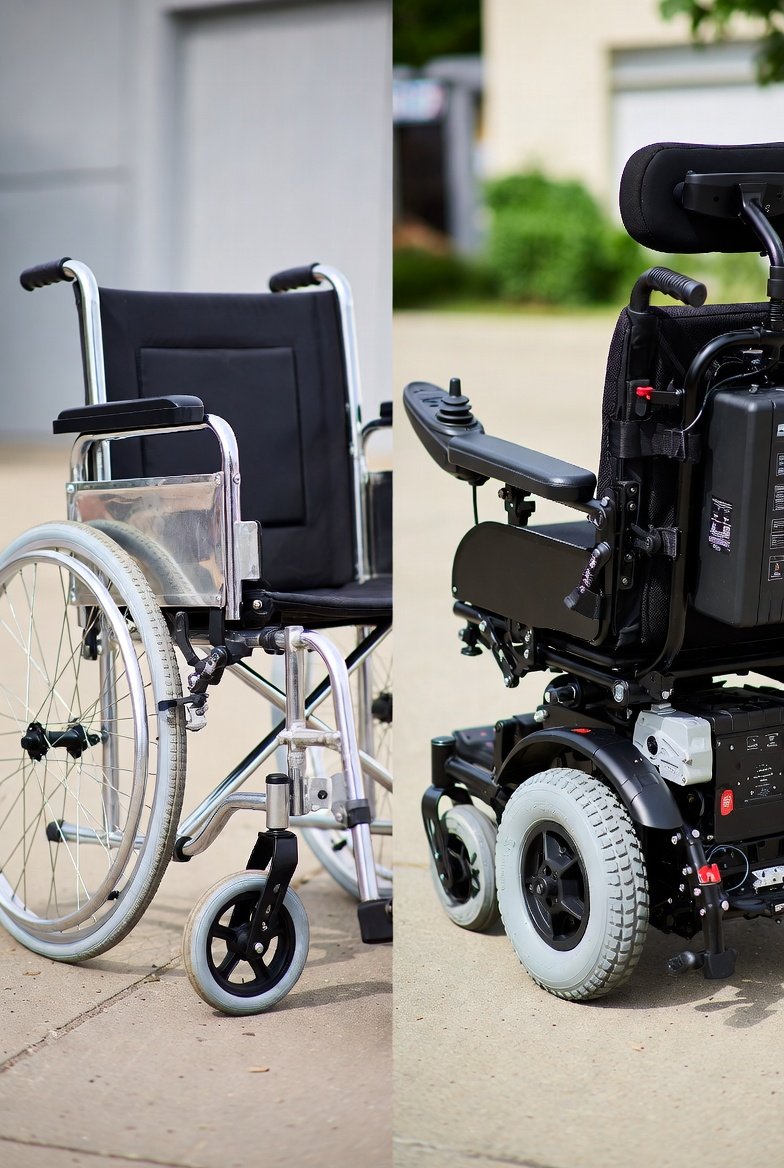
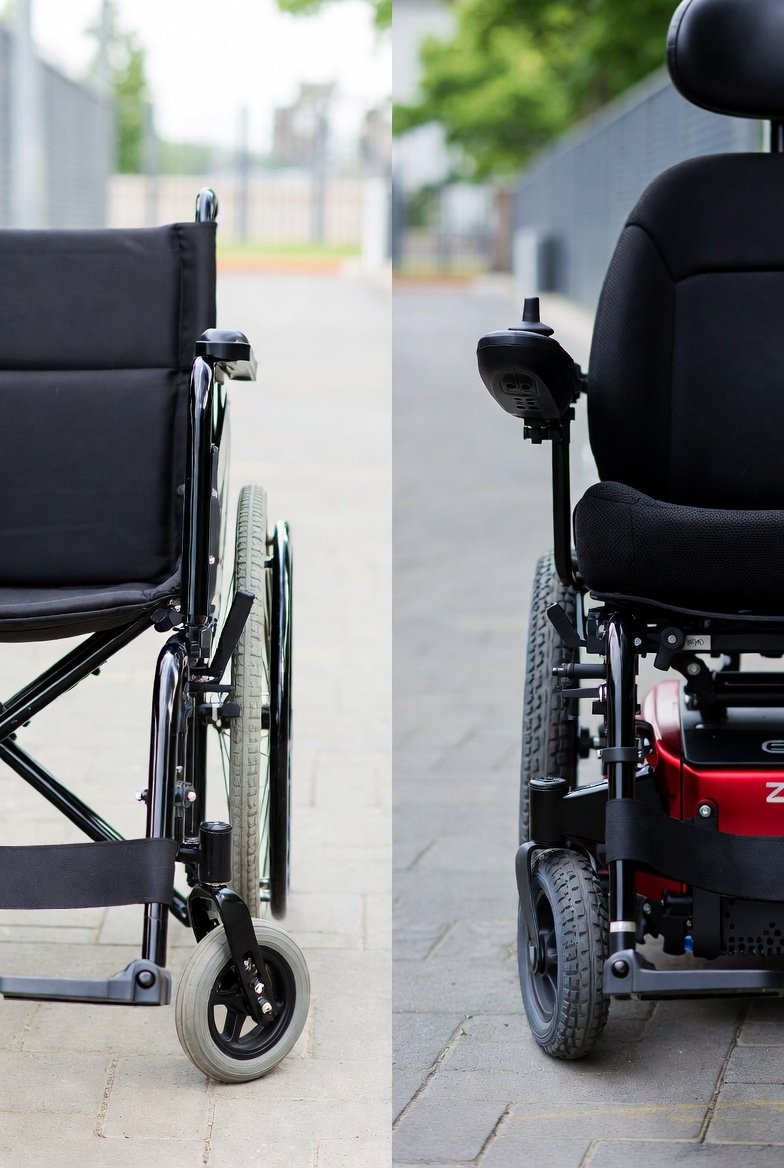
A manual wheelchair moves through user propulsion or caregiver assistance.
It is mechanically simple, portable, and widely adaptable to different environments.
Core characteristics typically include:
- Large rear wheels with hand rims
- Lightweight to moderately weighted frames
- Foldable or rigid construction
- No motor or battery system
- Minimal electronics
Manual wheelchairs trade physical effort for simplicity.
For many users, that simplicity translates into easier transport, fewer technical concerns, and greater flexibility when navigating tight spaces.
What Defines an Electric Wheelchair
An electric wheelchair — sometimes called a power wheelchair — uses a motor and rechargeable battery to provide movement.
Instead of pushing the wheels manually, the user controls direction and speed through a joystick or similar interface.
Common characteristics include:
- Motor-driven wheels
- Rechargeable battery system
- Heavier structural frame
- Integrated control panel
- Designed primarily for independent movement
Electric wheelchairs trade weight and mechanical complexity for reduced physical strain and more consistent autonomy.
For users whose strength or endurance is limited, this shift can dramatically change daily mobility.
Effort vs Independence (The Core Structural Divider)
Nearly every downstream difference traces back to this single contrast.
Manual Wheelchair
- Requires arm, shoulder, or caregiver effort
- Independence depends heavily on strength and stamina
- Longer distances increase fatigue
- Slopes and thick carpeting demand more energy
For users with sufficient upper-body ability, this effort may feel manageable. For others, it becomes the defining limitation.
Electric Wheelchair
- Requires minimal physical exertion
- Independence remains consistent across longer distances
- Reduces repetitive joint strain
- Allows movement even when energy is low
When effort is no longer the barrier, daily mobility often expands — hallways feel shorter, outings become less intimidating, and repositioning is easier.
For many households, this is the structural shift that reshapes routines.
Portability and Transportation Reality
Transportation needs often narrow the decision faster than expected.
Manual Wheelchairs
Manual chairs are generally:
- Easier to lift into vehicles
- Faster to fold
- Compatible with most trunks
- Simpler to store at home
For people who travel frequently — whether for appointments, errands, or social visits — this portability can strongly influence usability.
Electric Wheelchairs
Electric models are substantially heavier.
As a result, they often require:
- Vehicle lifts or ramps
- Larger cargo areas
- Advance planning for transport
- More storage space
Frequent car loading can become impractical without supportive equipment.
For households with limited vehicle capacity, this factor alone can shape the decision.
Indoor vs Outdoor Mobility
Where a wheelchair will be used matters just as much as how.
Manual Wheelchairs
They typically perform well:
- Indoors on smooth flooring
- In tighter layouts
- Through standard doorways
Outdoor travel is certainly possible — but effort rises quickly across long distances or uneven surfaces.
What feels manageable for ten minutes may feel very different after thirty.
Electric Wheelchairs
Electric chairs tend to expand the mobility radius.
They are often better suited for:
- Longer routes
- Outdoor paths
- Community navigation
- Extended outings
Because propulsion is motorized, terrain has less impact on physical fatigue — though stability still depends on the specific design.
Environment often determines which option feels sustainable rather than exhausting.
Caregiver Involvement
Mobility decisions rarely affect only the user.
Manual Wheelchair
Caregivers may find themselves:
- Pushing during moments of fatigue
- Assisting on inclines
- Helping with repositioning
- Sharing transfer effort
Over time, repeated physical assistance can accumulate into meaningful strain.
Electric Wheelchair
The caregiver role often shifts from propulsion to oversight.
Typical involvement becomes:
- Helping with setup
- Monitoring safety
- Assisting with charging routines
- Supporting transfers
For some families, this change reduces physical demand and supports longer-term caregiving sustainability.
Comfort Across Longer Durations
Comfort is influenced by both seating design and physical exertion.
Manual Wheelchairs
As fatigue builds:
- Posture may decline
- Repositioning requires effort
- Muscles tire
- Sitting can feel more demanding
Even with supportive seating, energy expenditure remains part of the experience.
Electric Wheelchairs
Because propulsion does not rely on the body:
- Energy is conserved
- Repositioning is easier
- Movement feels more consistent
- Longer seated periods may feel more manageable
Duration of daily use often magnifies these differences.
Cost Structure — Looking Beyond the Purchase
Price matters, but ownership patterns matter too.
Manual Wheelchairs
Typically involve:
- Lower upfront cost
- Fewer mechanical components
- Minimal ongoing expenses
- No charging requirements
This simplicity often appeals to households seeking predictable ownership.
Electric Wheelchairs
Usually involve:
- Higher initial investment
- Battery replacements over time
- Possible electronic servicing
- Structured charging habits
Cost is less about the sticker price and more about long-term operational needs.
Understanding that difference prevents financial surprises later.
Maintenance and Reliability
Mechanical complexity shapes maintenance expectations.
Manual Wheelchairs
With fewer components, they are often:
- Easier to service
- Faster to repair
- Less dependent on specialized technicians
Many issues are straightforward.
Electric Wheelchairs
More advanced systems bring additional responsibility.
They depend on:
- Electronics
- Motors
- Battery health
- Control systems
Repairs can require specialized expertise, and downtime may last longer depending on parts availability.
Complexity introduces both capability and obligation.
Home and Lifestyle Fit Check
Before narrowing the choice, it helps to step back and evaluate daily patterns rather than isolated scenarios.
Consider:
Physical ability:
Can the user self-propel comfortably and repeatedly?
Daily distance:
Are movements mostly short and indoor — or extended?
Environment:
Is the layout tight, open, urban, suburban?
Transportation:
Will the chair be loaded into vehicles frequently?
Caregiver support:
Is assistance occasional or routine?
Answers to these questions often point clearly toward one structural direction.
Where Each Option Commonly Falls Short
Every mobility structure has constraints.
Manual Wheelchairs May Feel Limiting When:
- Arm strength is reduced
- Endurance fluctuates
- Longer distances are unavoidable
- Fatigue begins affecting safety
Effort becomes the bottleneck.
Electric Wheelchairs May Feel Limiting When:
- Frequent lifting is required
- Storage space is tight
- Travel flexibility is essential
- Charging routines feel burdensome
Weight becomes the constraint.
Recognizing these friction points early prevents mismatched expectations.
How This Page Fits the Bigger Decision
This comparison is designed to narrow the field — not finalize it.
Once you understand:
- Whether effort or portability matters more
- How independence is maintained
- What daily environments demand
- Where caregiver roles expand or shrink
…the next step becomes easier to approach with confidence.
For a broader decision that considers age, safety, comfort, and everyday mobility patterns together, refer to the primary guide:
If portability is already emerging as a major factor, you may also find it helpful to review:
FAQs
What is the main difference between manual and electric wheelchairs?
Manual wheelchairs rely on physical propulsion, while electric wheelchairs use a motor and battery to provide powered mobility.
Are electric wheelchairs easier to use than manual ones?
They typically reduce physical strain because movement is motorized, but they require charging and ongoing maintenance.
Is a manual wheelchair better for travel?
Manual wheelchairs are often easier to transport due to lighter weight and foldable designs.
Can someone switch from manual to electric later?
Yes. Many users begin with manual mobility and transition to electric options as needs evolve.