
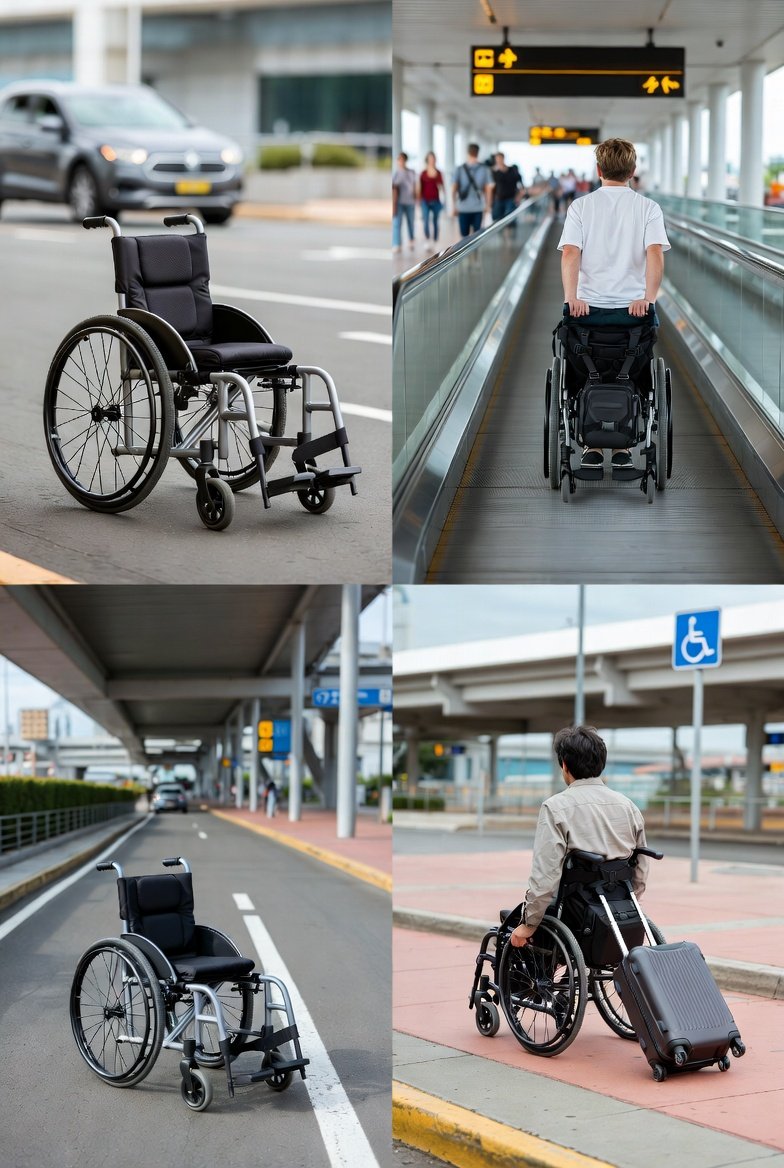
Transport Wheelchairs: What They Are, Who They’re For, and When They Make Sense
Transport wheelchairs are one of the most commonly misunderstood mobility devices — and that misunderstanding often leads to buying the wrong chair, struggling with daily use, or replacing equipment sooner than expected.
At first glance, they appear to be lightweight versions of standard wheelchairs. In reality, they serve a different purpose entirely.
A transport wheelchair is built for assisted movement, short-duration mobility, and situations where portability matters more than independence. When used in the right environments, it can simplify outings, reduce caregiver strain, and make travel significantly easier. When expectations don’t align with the design, however, the limitations tend to surface quickly.
Understanding where a transport wheelchair fits — and where it does not — is what allows households to choose mobility equipment with confidence rather than uncertainty.
What Is a Transport Wheelchair?
A transport wheelchair is a push-only mobility chair designed to be operated by a caregiver, companion, or medical professional rather than the seated user.
Unlike traditional manual wheelchairs, these models are not built for self-propulsion. Every aspect of their structure prioritizes controlled assistance and portability.
Typical defining features include:
- Smaller rear wheels without hand rims
- Lightweight frame construction
- Compact folding capability
- Narrow overall width
- Streamlined seating design
Because the user cannot independently move the chair, the focus shifts from autonomy to convenience — particularly during transitions between locations such as homes, vehicles, and medical facilities.
It helps to think of a transport wheelchair less as a full-time mobility system and more as a practical movement tool for specific situations.
How Transport Wheelchairs Differ From Standard Wheelchairs
The difference between these chair types is structural rather than cosmetic, and recognizing it early helps prevent one of the most common mobility mismatches.
Feature | Transport Wheelchair | Standard Manual Wheelchair |
Self-propulsion | ❌ No | ✅ Yes |
Rear wheel size | Small | Large |
Weight | Very light | Heavier |
Portability | Excellent | Moderate |
Independence | Low | Medium–High |
Transport wheelchairs are designed around assistance. Standard wheelchairs are engineered to support independent movement.
For many households, the deciding factor comes down to a simple question: Is independence necessary, or is guided mobility sufficient?
Who Transport Wheelchairs Are Best For
Transport wheelchairs tend to perform best when mobility needs are predictable and situational rather than constant.
Short Outings and Medical Visits
These chairs are commonly used for:
- Doctor appointments
- Outpatient clinics
- Hospital navigation
- Therapy visits
- Events that require extended standing
In these settings, the goal is not continuous seating — it is conserving energy while maintaining safe, supported movement.
Mobility specialists often describe transport chairs as “transition tools,” helping users move comfortably through environments that might otherwise feel physically demanding.
Travel and Vehicle-Based Mobility
One of the strongest advantages of transport wheelchairs is how naturally they integrate into travel routines.
They are especially effective for:
- Frequent car loading
- Ride-share transportation
- Airport navigation
- Hotel stays
- Cruises and day trips
- Best wheel chair for travel
Because they fold quickly and weigh less than many standard wheelchairs, they reduce lifting strain and simplify logistics for caregivers managing mobility equipment alongside luggage or medical supplies.
For families who travel regularly, this convenience often becomes one of the most valuable benefits.
Users With Reliable Assistance
Transport wheelchairs are best suited for individuals who rarely travel alone and can depend on a companion for movement support.
They typically work well for users who:
- Have consistent caregiver availability
- Do not require independent propulsion
- Prefer straightforward equipment
- Benefit from guided transfers
When caregiver support is dependable, the chair often feels like a natural extension of daily routines rather than a limitation.

Where Transport Wheelchairs Fall Short
Clear expectations are what prevent long-term dissatisfaction. Understanding limitations before choosing a mobility device allows households to plan more effectively.
Not Designed for Independent Mobility
If a user expects to move even short distances without assistance, a transport wheelchair will likely feel restrictive.
Loss of independence is one of the most common reasons people transition from a transport chair to a standard wheelchair later.
Not Intended for All-Day Sitting
Transport wheelchairs prioritize portability over ergonomic support.
As a result:
- Fatigue may build faster
- Pressure points can develop
- Postural support is limited
- Comfort declines over long durations
For occasional use, these tradeoffs are rarely problematic. For full-day seating, they become much more noticeable.
If prolonged sitting is anticipated, exploring a lightweight manual wheelchair often provides better long-term support.
Limited Outdoor Capability
Small wheels are easier to maneuver indoors but less capable on uneven terrain.
Transport chairs often struggle with:
- Gravel paths
- Grass
- Broken sidewalks
- Uneven pavement
- Long outdoor distances
They generally perform best on smooth, predictable surfaces such as medical facilities, airports, shopping centers, and residential flooring.
Weight, Size, and Portability Reality
Portability is where transport wheelchairs consistently stand out.
Most models are:
- Light enough for single-person lifting
- Quick to fold
- Compact for trunk storage
- Narrow enough for standard doorways
For caregivers lifting equipment multiple times per day, this reduced weight is more than a convenience — it helps lower physical strain over time.
In many homes, the ability to store the chair easily becomes just as valuable as the mobility support itself.
Comfort and Seating Expectations
Transport wheelchairs are engineered for movement efficiency rather than advanced seating ergonomics.
Common characteristics include:
- Basic seat cushioning
- Limited lumbar support
- Minimal adjustability
- Simpler back structure
During short outings, these design choices typically go unnoticed. Over longer periods, however, comfort often becomes the limiting factor.
Matching the chair to realistic sitting durations helps prevent discomfort and ensures the device is used as intended.
Transfers and Safety Considerations
Because the chair relies on caregiver operation, safe transfer habits play an important role in overall usability.
Helpful practices include:
- Fully engaging the brakes before transfers
- Stabilizing the chair prior to sitting or standing
- Checking footrest positioning
- Avoiding rushed movements
Most safety concerns stem from hurried transitions rather than equipment design. When used thoughtfully, transport wheelchairs are straightforward and predictable to manage.
Home and Lifestyle Fit Checklist
Before selecting a transport wheelchair, evaluating everyday patterns can provide valuable clarity.
Consider the following:
- Is a caregiver consistently available?
- Will the chair be used for minutes, hours, or full days?
- Are surfaces mostly smooth or unpredictable?
- Is storage space limited?
- Is the priority assistance or independence?
When expectations align with these factors, transport wheelchairs typically perform exactly as intended.
Typical Cost Range
Most transport wheelchairs fall between $100 and $400, making them one of the more accessible mobility devices.
Price differences often reflect:
- Frame durability
- Folding mechanism quality
- Brake reliability
- Overall construction
Higher pricing does not necessarily translate into dramatically improved seating comfort, but it can contribute to smoother handling and longer equipment lifespan.
For equipment lifted frequently, sturdy construction may matter more than premium padding.
Common Misconceptions
❌ “It’s simply a lighter wheelchair.”
❌ “It works well for everyday mobility.”
❌ “Comfort matches a standard chair.”
A transport wheelchair is not a downgraded version of a traditional wheelchair — it is a purpose-built device designed specifically for assisted movement.
Viewing it through that lens helps households choose mobility equipment with greater clarity.
When a Transport Wheelchair Makes Sense
A transport wheelchair is often a practical fit when:
- Mobility needs are intermittent
- Travel is frequent
- Caregiver support is dependable
- Storage space is limited
- Simplicity is preferred over adjustability
Outside these conditions, the constraints may become noticeable sooner.
Where to Go Next
If mobility needs begin extending beyond assisted outings, exploring a lightweight manual wheelchair or another mobility option may provide greater long-term flexibility.
For broader guidance that compares independence, comfort, travel readiness, and daily usability across wheelchair types, refer to the primary decision guide:
FAQs
What is a transport wheelchair used for?
Transport wheelchairs support assisted mobility during short outings such as medical visits, travel, and events where walking endurance may be limited.
Can someone propel themselves in a transport wheelchair?
No. Transport wheelchairs are designed to be pushed by a caregiver or companion.
Are transport wheelchairs suitable for elderly users?
Yes — particularly when caregiver support is available and mobility assistance is needed. They are less appropriate for independent daily use.
How is a transport wheelchair different from a regular wheelchair?
Transport wheelchairs have smaller rear wheels, lighter frames, and are not built for self-propulsion, while standard wheelchairs support independent movement.